The Accidental Awakening: Albert Hofmann and the First LSD Trip
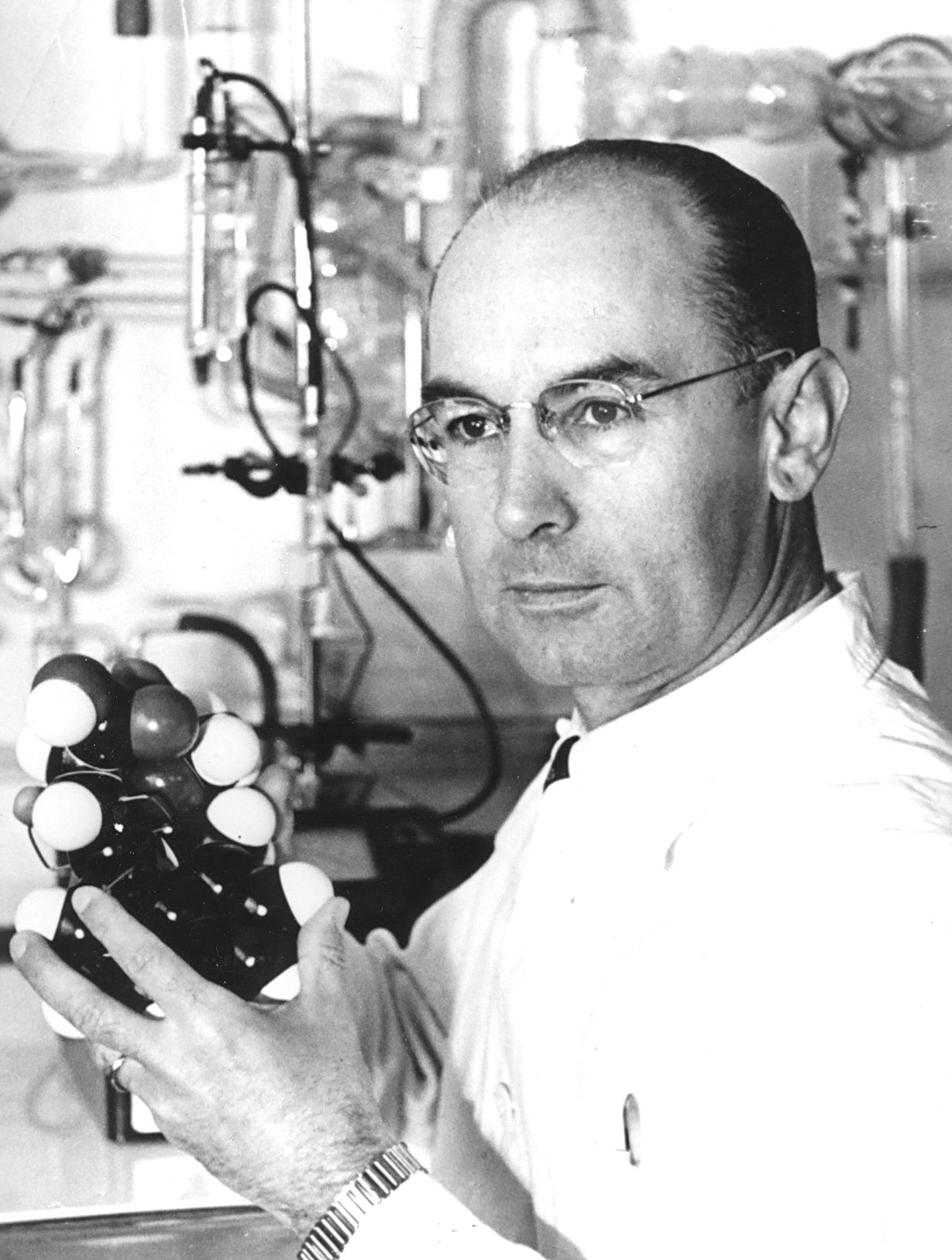
Photo: Novartis Corporate Archive
On the afternoon of April 19, 1943, a mild-mannered Swiss chemist swallowed a quarter-milligram of a compound he had made himself, climbed onto his bicycle, and pedaled into an undiscovered world of psychedelic discovery. By the time he reached his home in Basel, Albert Hofmann had become the first human being to knowingly & intentionally experience the effects of lysergic acid diethylamide: LSD. The ride was so central to the story that psychedelic enthusiasts worldwide still commemorate this date every year as "Bicycle Day."
But the trip that made Hofmann famous was really the second act of the story. The discovery and first synthesis itself had happened almost by accident in his lab almost 5 years earlier.
A "stimulant" that was never meant to alter minds
Hofmann was not looking for a mind-altering psychedelic drug when he made the discovery. In the late 1930s he was a research chemist at Sandoz Laboratories in Basel, Switzerland, working through the pharmacology of ergot, a fungus that grows on rye and other grains. Ergot is toxic and historically dangerous, but its alkaloids were medically valuable, and Sandoz was systematically synthesizing and testing each of the derivatives of lysergic acid, ergot's core building block.
The goal was practical: Hofmann hoped to produce a circulatory and respiratory stimulant to be used in future medicine. He combined lysergic acid with various other molecules, cataloguing each new compound in sequence. On November 16, 1938, he produced the 25th substance in the series: lysergic acid diethylamide, which he labeled LSD-25.

Photo: Burgkirsch / Wikimedia Commons (CC BY-SA 2.0)
When the compound was tested on animals, the results were recorded as unremarkable. The lab noted that the test animals became restless during anesthesia, but nothing about the data suggested a medical breakthrough or benefit. LSD-25 was judged as uninteresting and shelved, with Hofmann and his colleagues moving on.
A hunch, five years later
Most abandoned compounds stay abandoned. LSD-25 thankfully did not, and the reason was a hunch from Hofmann. He later described it as an intuition that the molecule deserved a closer look, something he considered unusual because discarded substances were very rarely resynthesized with no clear purpose. But acting on that hunch, Hofmann prepared a fresh batch on April 16, 1943.
What happened next is the first of the two accidents. While working with the compound on the 16th, Hofmann began to feel strange; restless, slightly dizzy, his perception, as he describes it, "subtly shifting."
He stopped his work for the day and went home, where he lay down and quickly sank into a dreamlike state flooded with vivid, kaleidoscopic images and intense colors with his eyes closed. The effects faded after about two hours but left Hofmann baffled but suspicious.
He concluded that he must have somehow absorbed a trace of LSD through his skin, but what astonished him was the question: if such a minuscule, unmeasured amount could produce effects that powerful, the substance had to be extraordinarily potent, far beyond anything known at that time.

Photo: Novartis Corporate Archive
Bicycle Day: April 19, 1943
To confirm his suspicion, Hofmann decided to do what any daring chemist did in that era: dose himself deliberately under controlled conditions. He chose what he believed was a tiny, cautious amount: 250µg (0.25 milligrams).
This was a common dose for ordinary drug testing.
For LSD it was an enormous starting dose. Hofmann and others would soon learn that the compound produces noticeable micro effects at roughly 20–25 micrograms, meaning his "prudent" starting point was more than ten times a threshold dose.
At an unintentional but hilarious 4:20 p.m., Albert Hofmann dissolved the crystalline LSD in water and drank it, first noting that it was tasteless.
Then he waited. By about 5:00 p.m., his handwritten lab journal captured the onset in an intense clinical scrawl. The first written record of an acid trip in history:
"Beginning dizziness, feeling of anxiety, visual distortions, symptoms of paralysis, desire to laugh."
After that entry, the notes stopped — the experience had quickly overtaken his ability to write.
Alarmed by how quickly the effects were intensifying, Hofmann asked his laboratory assistant to help him get home. During wartime Switzerland, with civilian automobile use restricted due to ongoing fuel rationing, Hofmann chose to ride home on his bicycle, and with his assistant the two set off through the streets of Basel.

Photo: BlotterStore.com
Hofmann recalls feeling as though he were frozen in place, unable to move forward, yet his assistant later told him they had in fact been traveling quickly. Moving through Basel, everything in his field of vision wavered and warped, as if he were looking into a curved mirror. Time and motion had come unglued from reality.
The terror before the wonder
The early hours at home were frightening rather than blissful. Hofmann was gripped by anxiety and dread. Furniture seemed to move and breathe. He became convinced at various moments that he was losing his mind, that he had fatally poisoned himself, and, in one famous detail, that his kindly next-door neighbor had transformed into a malevolent witch.
He asked for a doctor to be called and requested a glass of milk from his neighbors, as in 1940s folklore, milk was thought to help neutralize some poisons.
When the doctor arrived, he could find nothing physically wrong with Hofmann; his vital signs were stable, with the only visible abnormality being a pair of massively dilated pupils.
Reassured that he was not dying, Hofmann began to relax, and as the fear faded, his trip continued. In the calmer hours that followed, his understanding of the substance changed.
The terror gave way to astonishment. Hofmann described the experience of lying with his eyes closed and watching an uninterrupted flow of extraordinary shapes and kaleidoscopic color, every sound around him seeming to translate into its own vivid visual form. When he awoke the next morning the effects had cleared, feeling refreshed and clear-headed, with a renewed sense of beauty in the world.
What the trip meant
Hofmann understood immediately that he had stumbled onto something scientifically important. Here was a substance active in microscopically small doses that could temporarily and profoundly reshape human perception, mood, and sense of self, without any lasting physical harm that he could detect. He truly believed such a tool could be valuable to psychiatry and neurology, offering researchers a window into the mechanics of the mind and even, potentially, a therapeutic aid — a belief he held for the rest of his long life.
Sandoz agreed there was promise. The first scientific paper on LSD was published by Hofmann and the psychiatrist Werner Stoll in 1943, and Stoll's fuller account of its psychological effects followed in 1947. Sandoz went on to legally market LSD under the name Delysid, distributing it to researchers and clinicians who explored its use in psychotherapy and in the study of psychosis through the 1950s and into the 1960s.

Photo: Novartis Corporate Archive
The legacy of a bicycle ride & further discoveries
Hofmann wasn't done. In the 1950s he went on to identify psilocybin, the active ingredient in "magic mushrooms," truly cementing his place as a founding figure of modern psychedelic chemistry.
What Hofmann could not have foreseen was where his "problem child" (his own affectionate name for LSD) would end up. LSD escaped the laboratories and clinics. By the 1960s it had become a defining symbol at the forefront of the counterculture movement, and Hofmann grew concerned at how it was popularized. He particularly blamed the evangelism of Timothy Leary for the drug's countercultural notoriety and its eventual government criminalization.
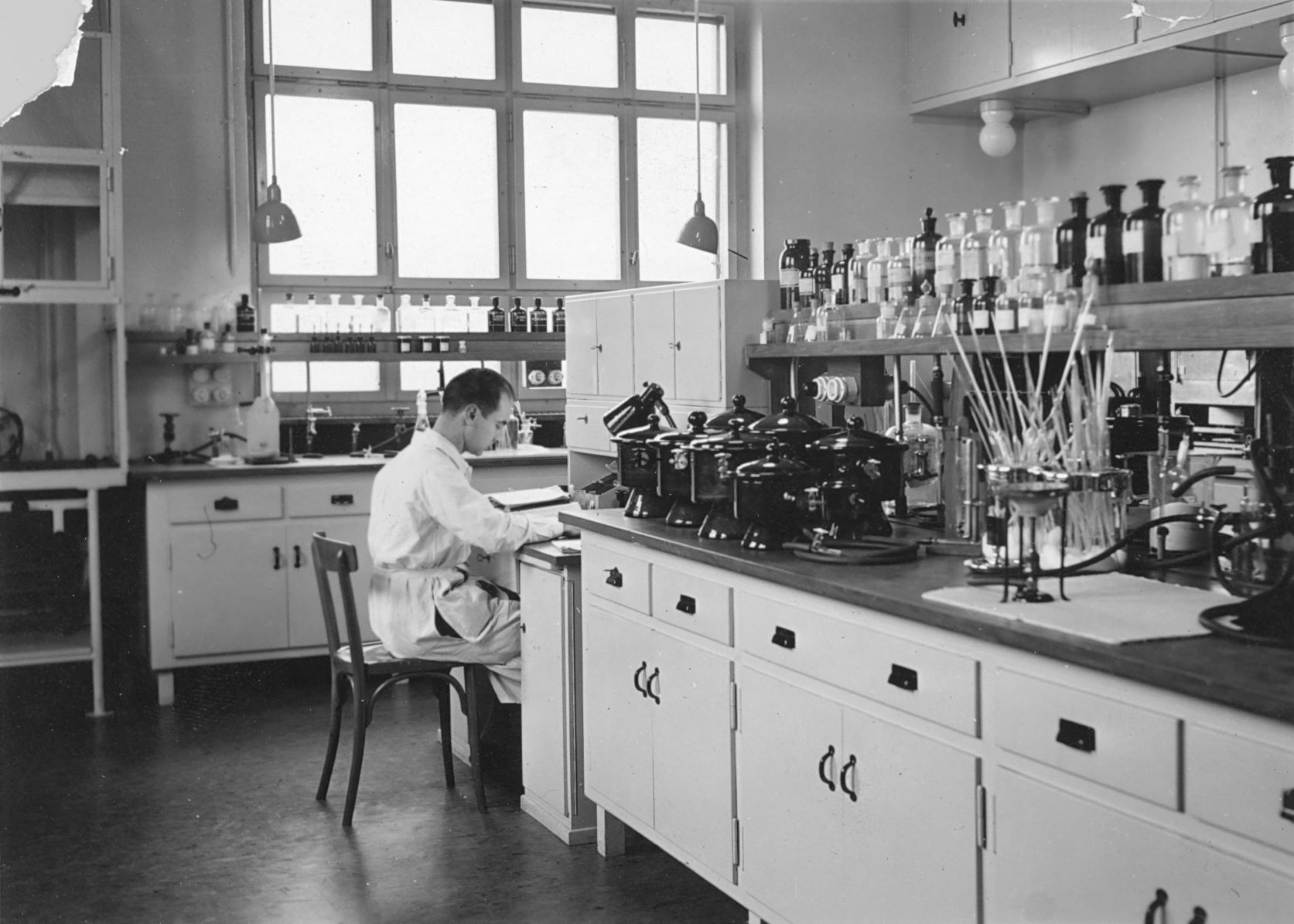
Photo: Novartis Corporate Archive
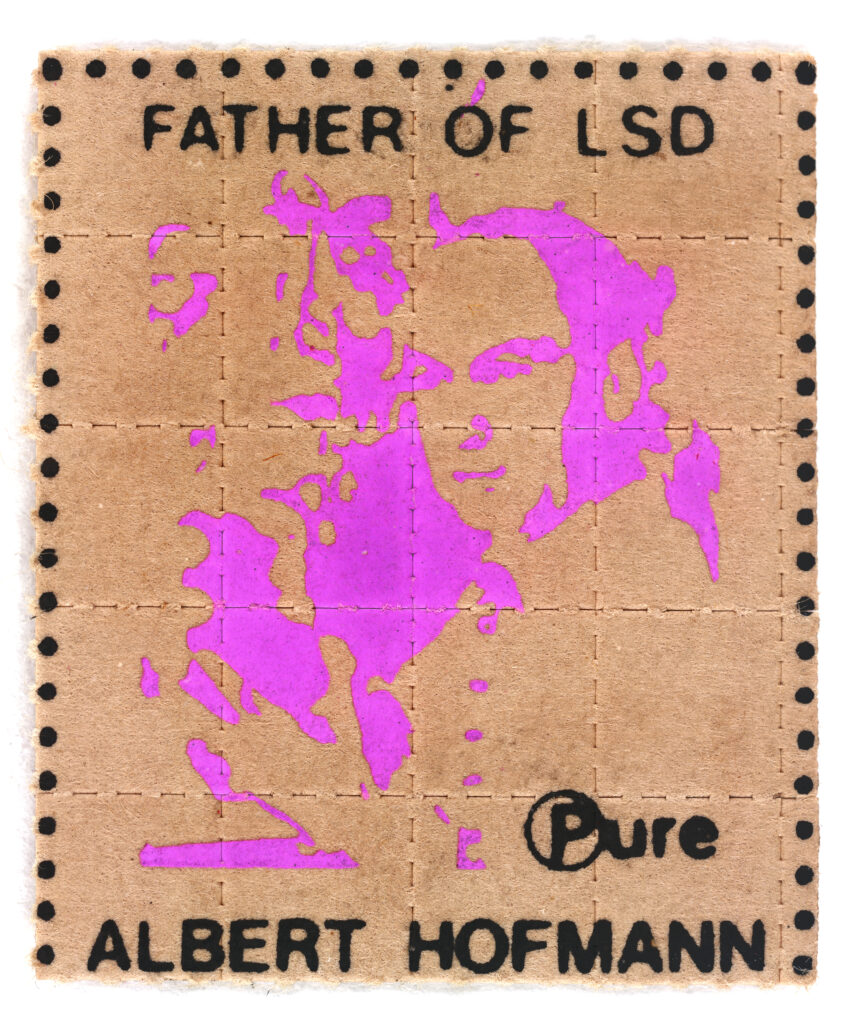
Photo: Mark McCloud: Institute of Illegal Images
Hofmann himself remained a measured, almost professorial advocate. He continued taking occasional small doses throughout his life, kept following the science he had helped create, and lived to 102, sadly dying in 2008, but living long enough to witness the beginnings of a modern renaissance in clinical research into psychedelics for depression, PTSD, and end-of-life anxiety.
The impact of Albert Hofmann's discoveries are simply unmeasurable, LSD opened new pathways for neuroscience and psychiatry, challenged cultural boundaries, and inspired generations of artists, free-thinkers, and spiritual seekers. What began as a laboratory accident left a lasting impact on human consciousness, leaving a mark that continues to shape medicine, philosophy, and culture still to this day.
- Albert Hofmann, LSD: My Problem Child (1979) — Hofmann's own memoir and the primary account of the April 1943 events
- Encyclopædia Britannica, "Today in History: April 19"
- Smithsonian Magazine, on the anniversary of Bicycle Day
- Multidisciplinary Association for Psychedelic Studies (MAPS), anniversary retrospective (quotes Hofmann's journal)
- Wikipedia: "History of LSD," "Albert Hofmann," "Bicycle Day"
- Novartis/Sandoz company archives and the Swiss National Museum blog